

I lost count of how many founders tell me their competitive advantage is price.
“We’re cheaper than competitors.”
“We offer the same thing for less.”
“We pass the savings to the customer.”
If your entire edge is low prices, and competitors can match those prices tomorrow, you do not have a competitive advantage. You have a tactic. And tactics are temporary.
A real competitive advantage must be sustainable. It must give you something competitors cannot easily copy, even if they try.
Let’s reflect on what a real advantage looks like in practice.
The Value Bar Strategy Framework
The value bar framework is, in my opinion, one of the most powerful strategy models ever created.
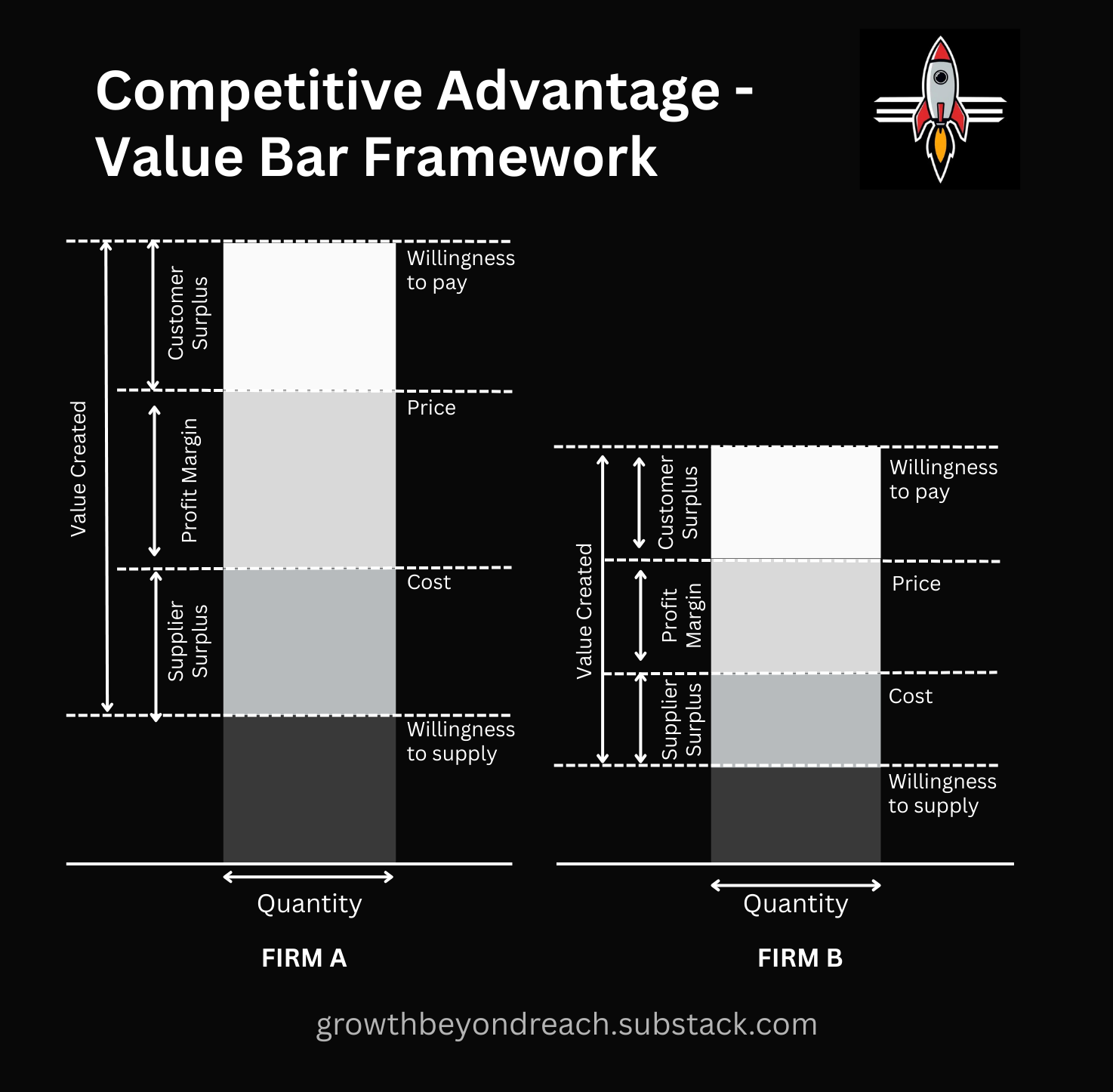
It looks at value through four numbers:
• WTP: Customers’ willingness to pay
• P: The price you charge
• C: Your cost to deliver
• WTS: Suppliers’ willingness to supply
Willingness to pay minus willingness to supply equals total value created.
Your margin sits inside that value.
A firm has a competitive advantage when it creates more value than competitors. There are only two reliable ways to do this:
Increase willingness to pay more than your competitor
Reduce cost (or willingness to supply) more than your competitor
These correspond to the only two sustainable strategy paths:
• Differentiation
• Cost Leadership
Path 1: Differentiation
Differentiation increases willingness to pay.
It makes customers value your product more highly than alternatives, allowing you to charge higher prices without losing demand.
Differentiation is what allows companies to command a premium even when competitors offer similar functionality.
Examples:
Apple does not do discounts because its ecosystem, design, and brand are irreplaceable. Competitors can copy features, but they cannot be Apple.
Louis Vuitton commands premium prices not because of materials, but because of heritage, craftsmanship, brand equity, and cultural status. You can make a similar bag. You cannot recreate 150 years of brand meaning.
Nike sells a sneaker for $120 dollars when similar shoes go for $60 thanks to its brand power, athlete endorsements, and cultural relevance.
Ways to differentiate:
Based on the logic of the value bar, companies increase willingness to pay by strengthening:
Customer value
Better product performance, stronger design, higher quality.
Brand value
Meaning, symbolism, reputation, emotional resonance.
Experience value
Frictionless service, superior support, faster delivery, convenience.
Perceived value
Storytelling, positioning, cultural relevance, trust.
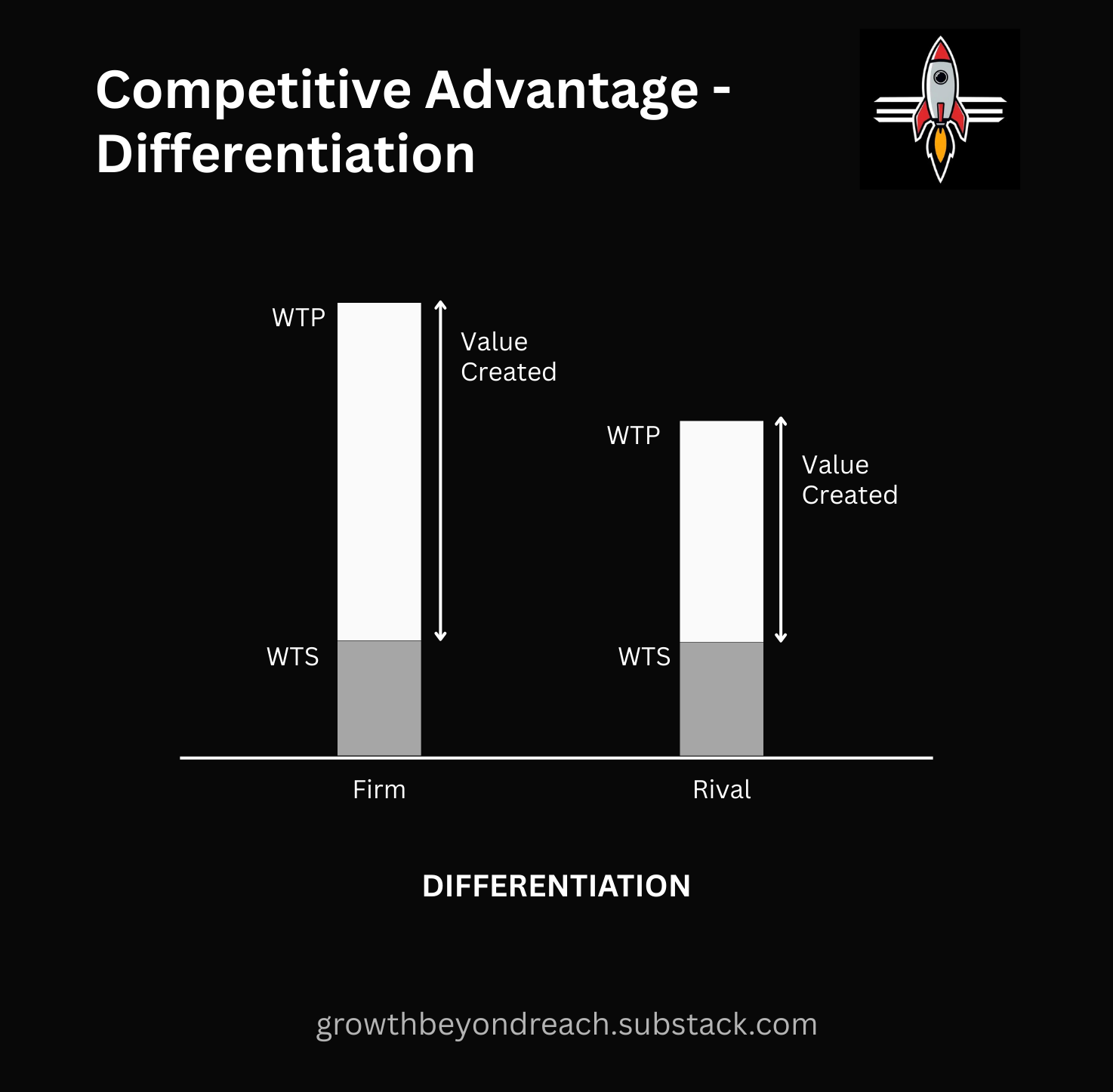
A differentiated company widens the top of the value bar: customers are simply willing to pay more.
The Value Bar:
The bar reflects the competitive advantage gained through Differentiation, showing:
• Higher WTP
• Same or similar costs
• A wider value wedge
Path 2: Cost Leadership
Cost leadership widens the value bar from the bottom.
It reduces the cost of delivering the product, without lowering willingness to pay.
The key is that the cost advantage must be structural, not temporary.
Structural means: competitors cannot copy it quickly or cheaply.
Examples:
Ryanair runs on an ultra lean model based on one aircraft type, rapid turnarounds, secondary airports that legacy airlines cannot replicate.
Saudi Aramco extracts oil at $3 per barrel while most competitors pay $20+. You cannot replicate being on top of the world’s cheapest oil reserves.
Walmart’s scale, logistics, and supplier leverage give it a cost structure smaller retailers cannot mimic. You can copy the store layout, not the supply chain.
Ways to achieve cost leadership:
Companies reduce cost by improving the underlying economics of the business:
Scale advantages
Larger volume spreads fixed costs and increases purchasing power.
Operational simplicity
Standardization, fewer variants, reduced complexity.
Efficiency
Streamlined supply chain, faster processes, lower waste.
Resource advantages
Access to lower-cost inputs that competitors do not have.
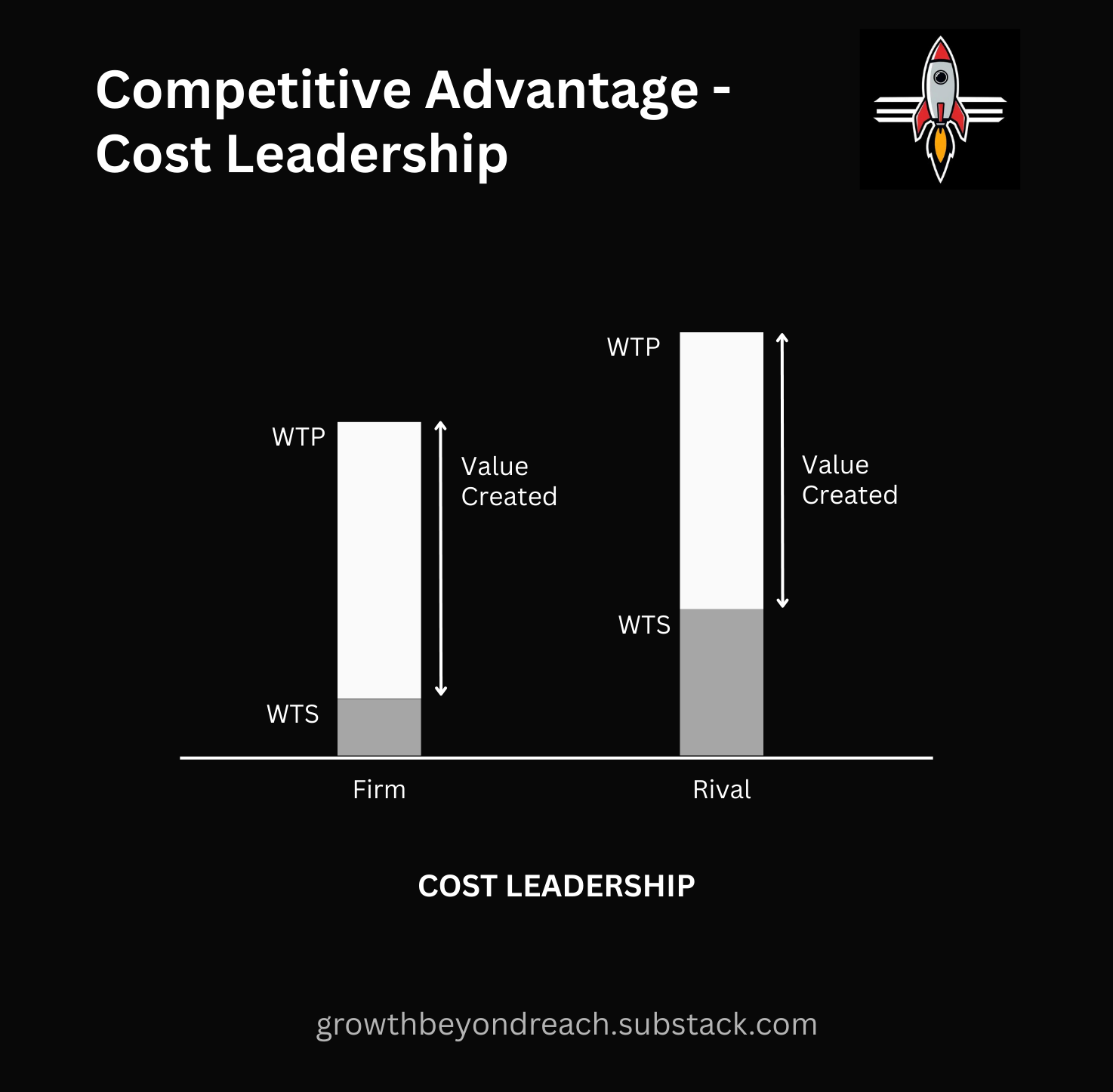
Structural cost advantages lower the bottom of the bar, increasing the total value created.
The Value Bar:
The bar reflects the competitive advantage gained through Cost Leadership, showing:
Same or similar WTP
Lower costs
A wider value wedge
The bottom line
If your advantage is price and everyone else can copy that price, you don’t have a competitive advantage.
Real competitive advantage comes from only two places:
• You create more willingness to pay
• You deliver the product at lower cost
Differentiation raises the top of the value bar.
Cost leadership lowers the bottom of the value bar.
Everything else is a tactic.
Only value is a strategy.
If you enjoyed this, feel free to share it.
Enrico